
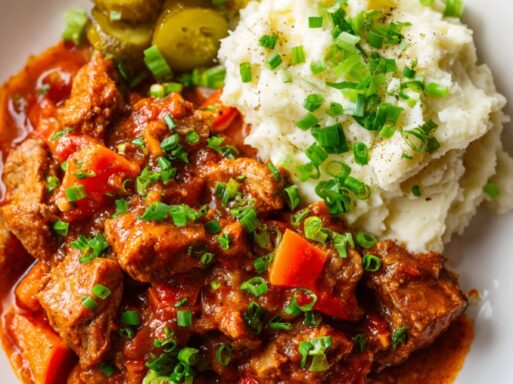



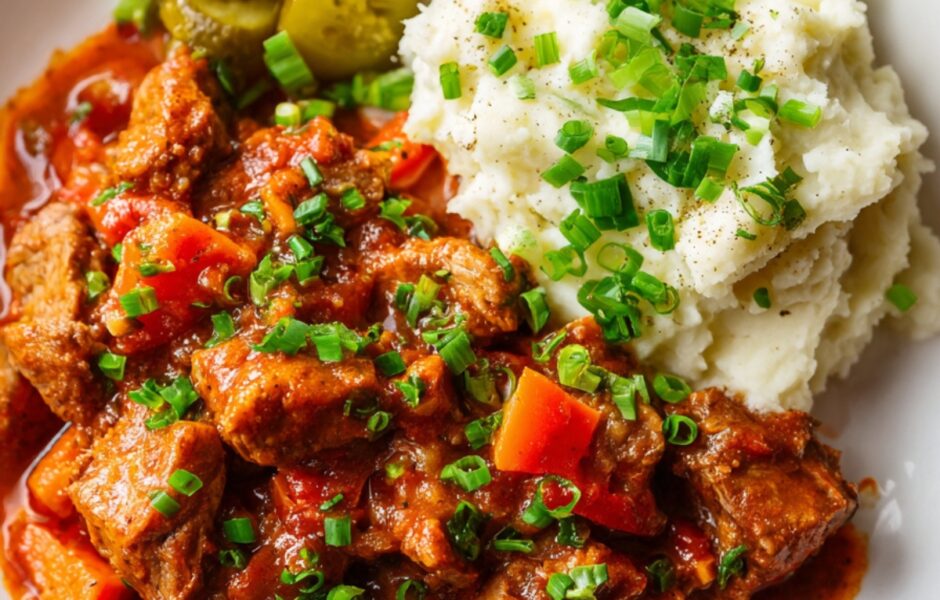

Traditional Polish beef gulasz is a rich, hearty stew that has become a beloved staple across Poland, especially during the colder months. Although its origins trace back to Hungarian cuisine, Polish cooks have adapted the dish over generations, creating a version that reflects local tastes, ingredients, and cooking traditions. Today, gulasz is known for its tender chunks of slow-cooked beef, deep savoury flavour, and comforting, rustic character.
At its core, Polish beef gulasz is built on simple, wholesome ingredients. Good quality beef — often chuck or stewing steak — is cut into bite-sized pieces and slowly simmered until meltingly tender. Onions play a crucial role, providing natural sweetness and body to the sauce. Garlic, paprika, marjoram, bay leaves, and black pepper are commonly used to create a warm, aromatic base. Unlike some Hungarian versions, Polish gulasz is typically less spicy and more focused on a balanced, savoury richness rather than intense heat.
The cooking process begins by browning the beef to develop deep flavour. This step creates caramelisation that forms the backbone of the dish’s taste. Onions are then sautéed until soft and golden before spices and stock are added. The stew is left to simmer gently for an extended period, allowing the beef to absorb the seasoning and become tender. Many Polish home cooks believe that gulasz tastes even better the next day, once the flavours have had time to deepen and meld together.
One of the most appealing aspects of traditional Polish gulasz is its versatility. It can be served in several ways depending on the region or family tradition. Some enjoy it with fluffy mashed potatoes, while others pair it with kluski śląskie (Silesian dumplings), buckwheat groats, or simply thick slices of fresh bread to soak up the rich sauce. In many Polish homes and restaurants, gulasz is a comforting main course that brings people together around the table.
Regional variations exist throughout Poland, with some cooks adding mushrooms, peppers, or a touch of tomato paste for extra depth. Others prefer a thicker, gravy-like consistency achieved by reducing the sauce slowly over low heat. Despite these variations, the essence of Polish gulasz remains the same: a slow-cooked, nourishing meal made with patience and care.
Beyond its delicious flavour, beef gulasz holds cultural significance in Polish cuisine. It represents traditional home cooking — meals that are practical, filling, and made to be shared with family and friends. Many people associate the aroma of simmering gulasz with childhood memories, festive gatherings, or cosy evenings during Poland’s long winters.
Today, traditional Polish beef gulasz continues to be enjoyed both at home and in Polish restaurants around the world. Its timeless appeal lies in its simplicity: honest ingredients, slow cooking, and bold, comforting flavour. Whether served at a family dinner table or prepared by chefs showcasing Polish culinary heritage, gulasz remains a true classic that celebrates the warmth and generosity of Polish food culture.