





The Traditional British Breakfast: A Hearty Start to the Day
Few meals are as iconic or as deeply rooted in culinary tradition as the traditional British breakfast, often affectionately called the “Full English.” Known for its hearty ingredients, comforting flavours, and satisfying portions, this classic morning meal has become a symbol of British food culture. Whether enjoyed at home, in a countryside café, or in a bustling city bistro, the traditional British breakfast remains a favourite for locals and visitors alike.
Origins of the Full English
The origins of the British breakfast date back several centuries. Historically, large breakfasts were common in rural communities where people needed a substantial meal to fuel long days of physical work. Farmers, labourers, and tradespeople would begin their mornings with a filling spread designed to keep them energised until midday.
During the Victorian era, the concept of the “Full Breakfast” became more formalised. Wealthy households would serve elaborate morning meals to guests, showcasing the best of British produce. Over time, the tradition filtered through all levels of society and eventually became a staple in cafés, guesthouses, and hotels across the UK.
Today, the traditional British breakfast is celebrated not only for its practicality but also for its comforting and nostalgic appeal.
The Essential Components
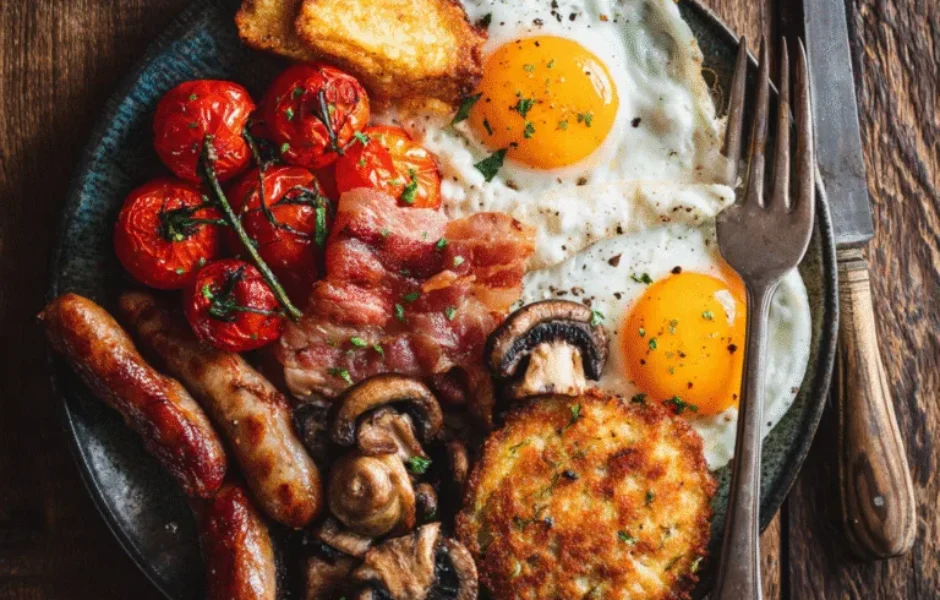
Although slight variations exist depending on the region or personal preference, the core components of a traditional British breakfast remain largely consistent.
Bacon is one of the most recognisable elements. British back bacon differs from the streaky bacon often found elsewhere, as it includes both the loin and belly, creating a leaner yet still flavourful cut. It is typically grilled or fried until lightly crisp.
Sausages are another essential part of the plate. Traditional British sausages, sometimes called “bangers,” are made with pork and seasoned with herbs and spices. They are usually pan-fried or grilled until golden brown.
Eggs are typically served fried, though scrambled or poached eggs are sometimes offered depending on preference.
Baked beans add a comforting and slightly sweet element to the meal. In the UK, they are usually served in a rich tomato sauce and provide a satisfying balance to the savoury components.
Grilled tomatoes and mushrooms add freshness and depth of flavour. The tomatoes are often lightly charred, while the mushrooms are sautéed until tender.
Another traditional item is black pudding, a type of blood sausage made with pork blood, oats, and spices. While not everyone chooses to include it, black pudding is considered an authentic part of many full breakfasts and has a rich, distinctive taste.
Finally, no traditional British breakfast would be complete without toast or fried bread. Toast is often served with butter and sometimes marmalade, while fried bread is cooked in the same pan used for the bacon or sausages, giving it a wonderfully indulgent flavour.
Regional Variations
Across the United Kingdom, the traditional breakfast takes on several regional forms. While the Full English is the most widely recognised, other variations include:
- The Full Scottish, which often includes tattie scones and sometimes haggis.
- The Full Welsh, where laverbread (a seaweed delicacy) and Welsh cockles may appear.
- The Ulster Fry from Northern Ireland, featuring soda bread and potato bread.
These regional adaptations highlight the diverse ingredients and culinary traditions found throughout the British Isles.
More Than Just a Meal
While the traditional British breakfast is undeniably filling, it also holds cultural significance. For many people, it represents a moment of comfort and togetherness. Weekend breakfasts shared with family or friends often revolve around a full English, enjoyed slowly with cups of tea or coffee.
In cafés and bistros across the UK, the full breakfast remains one of the most popular items on the menu. It is often seen as the ultimate comfort food — a plate that brings warmth, satisfaction, and familiarity.
The breakfast has also become a favourite among travellers visiting the UK. Tourists often seek out a traditional breakfast experience as part of exploring British culture. For many, it becomes a memorable highlight of their stay.
A Timeless Favourite
Despite modern dietary trends and lighter breakfast options becoming more common, the traditional British breakfast continues to hold its place as one of the country’s most beloved meals. Many cafés and restaurants now offer variations to suit different preferences, including vegetarian versions with plant-based sausages or grilled halloumi.
Yet at its heart, the full English remains true to its roots: simple ingredients cooked well and served generously.
Whether enjoyed as a weekend treat, a comforting brunch, or a satisfying start to a busy day, the traditional British breakfast is far more than just a meal. It is a reflection of British culinary heritage — hearty, welcoming, and full of character.